Thursday, April 23, 2026

Earth Frequency
Live Monitor

Track the electromagnetic resonance of the Earth and connect with the cosmic rhythm of our planet — the 7.83 Hz heartbeat we evolved within.

Live Spectrogram

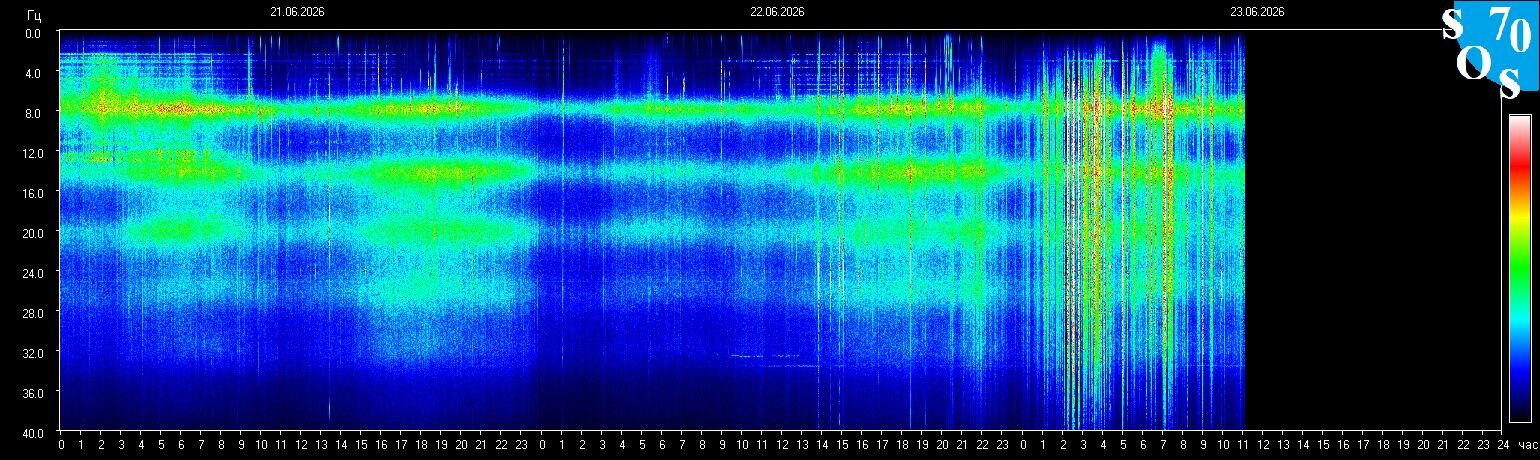
Live Spectrogram — Tomsk Station

Schumann resonance spectrogram from Tomsk station, frame 1 of 1

23/04/2026, 11:47

Tomsk · frame 1 / 1

7.83 Hz
SlowFast

Source: Tomsk State University Magnetotelluric Observatory via spacemonitor.io. Vertical axis 0–40 Hz; the ~7.83 Hz fundamental and harmonics are visible. Frames in this carousel (1 stored, max 72) are collected live during your session — auto-refresh every 60s.

Cosmic Data — Space Weather

Cosmic Now

Moon Phase

43%

Waxing Crescent

Energy builds — take action on your intentions

World Time

UTC
11:47:4
UniversalThu, Apr 23
EST
07:47:4
New YorkThu, Apr 23
GMT
12:47:4
LondonThu, Apr 23
CET
13:47:4
BerlinThu, Apr 23
KRAT
18:47:4
TomskThu, Apr 23
JST
20:47:4
TokyoThu, Apr 23

Daily Insight

Today's reading · calm

Quiet Fields, Solar Flare on the Horizon

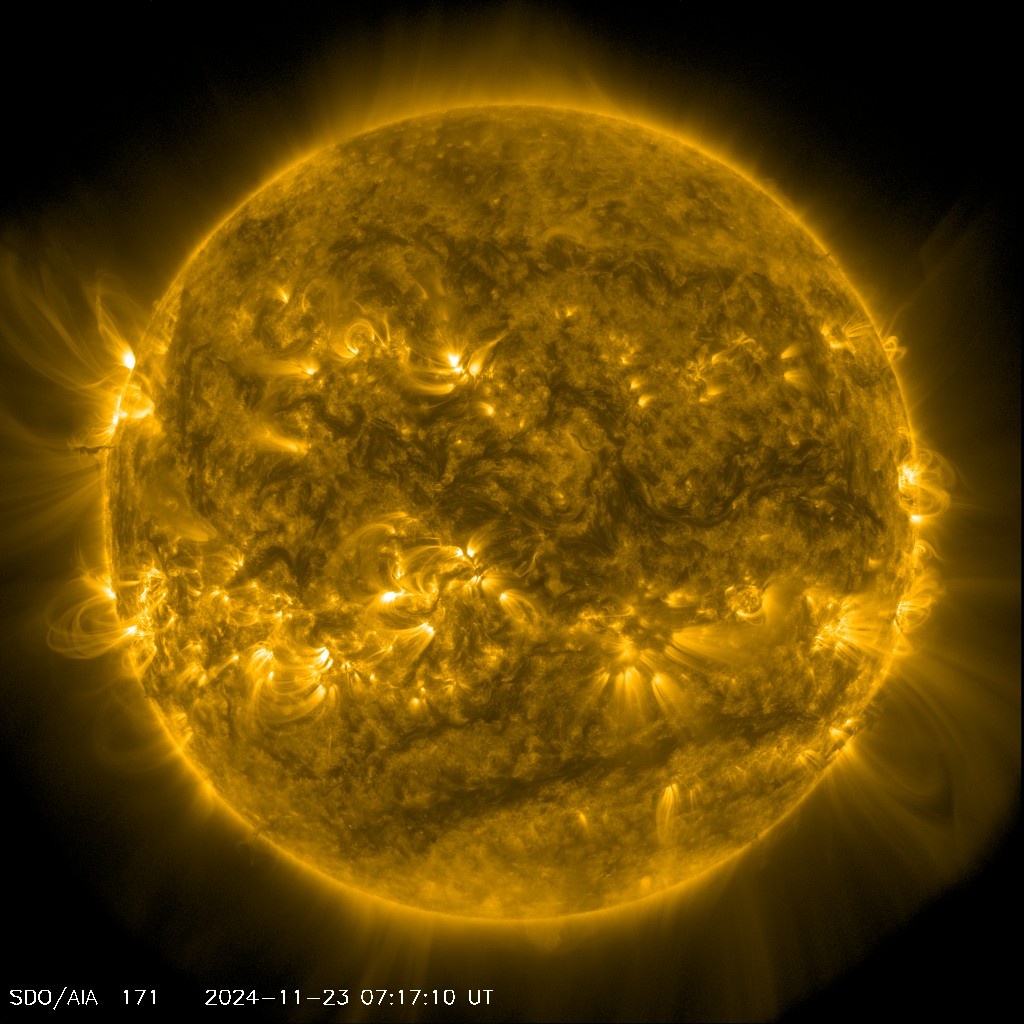
Geomagnetic activity is near-zero today, but an M4.3 X-ray flare signals the sun is not entirely at rest. A good day for focused work.

Read More

All articles →

Tools

Explore the Project

Frequently Asked Questions

What is the Schumann Resonance? +

The Schumann Resonance is the electromagnetic frequency of the Earth, vibrating at approximately 7.83 Hz. Discovered by physicist Winfried Otto Schumann in 1952, it is often called the 'heartbeat of the Earth' — a set of natural electromagnetic waves generated by lightning discharges in the cavity between Earth's surface and the ionosphere.

How does the Schumann Resonance affect humans? +

Research suggests the Schumann Resonance influences human well-being, sleep patterns, mental clarity, and consciousness. Many people report feeling more grounded when the frequency is stable, while spikes during solar storms can correlate with fatigue, headaches, or heightened intuition.

What is the normal frequency? +

The fundamental frequency is approximately 7.83 Hz, with harmonic peaks near 14.3, 20.8, 27.3, and 33.8 Hz. These naturally fluctuate and can spike during solar flares and geomagnetic storms.

Why is it called Earth's heartbeat? +

Because it is a constant electromagnetic pulse that has surrounded all life on Earth for hundreds of millions of years — a planetary rhythm we evolved within.

How can I track it today? +

Right here. We refresh the live Tomsk spectrogram every minute, pull the Kp-index and X-ray flux from NOAA SWPC, and publish a daily energy report.